
 If you or a loved one is suffering from an addiction this article will cover a perspective proven through clinical studies that you must not miss. Society in general has led addicts to feel ashamed of the insidious affliction they suffer from, and the stigma can contribute to both addiction and loneliness. Addicts cause pain and confusion in themselves and anyone that truly deeply cares for them.
What Does Loneliness Look Like?
Loneliness may not be the same for everyone. The Huffington Post explains, “Being lonely is more of a state of mind and that state of loneliness can change on a dime if one so desires.” Loneliness in addiction can look like:
- Disconnection from others
- Little to no interest in relationships
- Feeling depressed and anxious
- Thinking there is no one to talk to
- Believing there is no hope
- Feeling like no one cares
A History Of Failure
A little over a century ago this country made the decision to ban and make illegal nearly all drugs. They instituted punishments as an incentive to deter people from abusing these substances. This makes sense on a basic level of thinking, but the issue is that it is clearly not working, as shown in this chart. In my experience When something doesn’t work, you either have to fix it or throw it away.
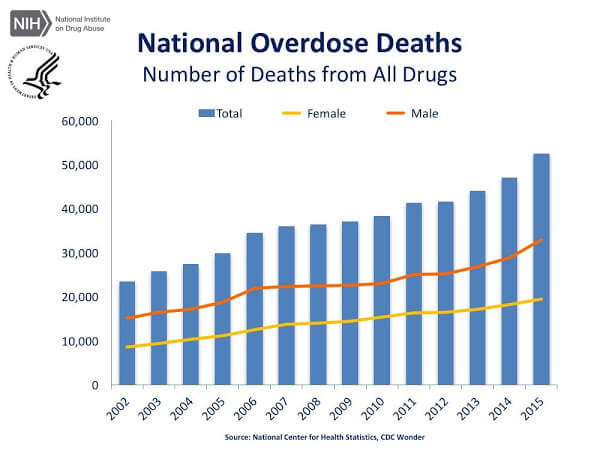
From the National Institute on Drug Abuse
Adapting To The Environment
In the early 1920s there were some interesting experiments conducted regarding addiction. They took a rat, placed it in a cage on its own and put two water bottles, one with Cocaine laced in the water and one containing fresh water. The rat drank the cocaine water until it overdosed and died. Bruce K. Alexander, Professor Emeritus, Simon Fraser University conducted some similar experiments but added some new variables. He made a “rat park” with cheese, tubes, toys, and most importantly friends! In this rat park he put the same two types of water bottles, one with cocaine laced water and one with pure water. The following observation was astonishing. The overdose rate amongst the rats dropped to 0 percent. Most rats didn’t even touch the cocaine water, and the ones that did stopped before overdose. Professor Alexander questioned, “What if addiction is not about being hooked on chemicals but it is instead an adaptation to your environment?”
The message to be heard here is that humans want to bond and connect. If our self-esteem is low, or we have been beaten down emotionally, we will naturally feel a desire to bond with something other than people. This could look like food, gambling, drugs, sex, television, shopping…really anything that makes us feel okay for a short period of time and provides relief. Therefore, it is counterproductive to punish addicts, remove them from society, label them felons, make them unemployable, shun them, etc…it just perpetuates the cycle.
Finding Solutions To The Drug Problem
In 2000, Portugal had one of the worst drug problems in Europe with 1 percent of their entire population being hooked on heroin. Portugal decriminalized all drugs and set up social programs to help drug addicts reintegrate back into society. They took all the money they were spending on housing, feeding, arresting, and policing these addicts and put it into social programs where they would set drug addicts up with jobs and pay half their salary for the year, thus incentivizing companies to hire them and affording the addict the opportunity to reconnect with people and find a sense of purpose. Fifteen years after these programs were set in motion the addiction rate is down 50 percent, overdose is down, HIV rates have gone down drastically in addicts, and in EVERY addiction study shows massive decreases.
Hopefully one day our society can catch on and be this progressive and in the solution.
Helpful Tips to Overcome Loneliness and Addiction
- Build a social network from the ground up. We addicts are intelligent people; we can see who is healthy and working on themselves and who is not – stick with the winners and you will become one.
- Find someone that you can trust that understands addiction and talk to this person VERY REGULARLY about your feelings of loneliness, anger or whatever it is that you’re experiencing
- Volunteer work and support groups such as 12-step fellowships are great places to make new healthy connections this will take time and attendance and may not happen right away so you have to keep going.
- I want to reiterate the importance of cutting out negative connections – not all connections are good connections.
- Make friends and family a priority in your life. When you’re down and out it’s not going to be your online “friends” there that save your skin; the real connections that you make will be there for you when you need them the most.
- Commit to people and make a plan to show up for them and then follow through with that plan!
Contact Us
Best Rehabs In Arizona
Scottsdale, AZ
www.bestrehabcentersinarizona.com
[email protected]
877-651-3366
*This blog post was authored by Lawrence Briggs, Director of Operations at Best Rehabs In Arizona. Ph: 480.320.0752




 This is number one on my list for a reason. Any inpatient treatment center can lock someone in their facility for 30 days and force an addict to abstain for a month. That can help in the beginning, but what about when the doors are unlocked and they have to go out into the real world? There has to be a focus on practical application and how to live a sober life outside of the safe space that inpatient treatment creates. It’s important to look for a program that addresses the following issues – how to get a job, how to be accountable/responsible, how to budget your finances, how to communicate effectively, how to keep yourself and your personal areas clean etc… Things that may seem basic to some, can be a challenge and feel strange to an addict who has neglected these areas of their life. Any treatment program worth considering will understand how crucial this is, and not only teach these life skills, but create opportunities for them to be practiced often.
 The truth is that there is no “one size fits all cure for addiction.” In fact, there is no cure at all. Statistics on success have little to no real value in this industry as far as I can tell. Each individual has the sole responsibility to gain and maintain knowledge about themselves and take the actions required to change their own life. Every person is responsible for their own recovery and happiness. A treatment program is responsible for equipping clients with life skills, providing guidance as a recovering addict carves a new path for themselves, and to hold clients to a higher standard than they have held themselves to in the past. If a program claims, “We have a 90% success rate!” they are selling you, not guiding you. Do your homework and remember that while there are no guarantees, there are endless possibilities for someone who commits to their recovery.
 scale than others; and this means little. You hit your bottom and hopefully you stop digging the hole. Hitting bottom can look different for different people; losing things of monetary value by various means including: getting robbed, misplacing possessions in some altered state of mind, pawning your (and other peoples) possessions and lending things to the wrong person that will never return it (not everyone is kind like you are). Gradually the addict starts losing the things that can’t be replaced (i.e. day after day spent running and time wasted making no progress towards any meaningful goals, losing the respect of their loved ones, respect for themselves and the feeling of uselessness, craving community and happiness.)
 is one of the hardest thing to do. Yet there are several simple questions to ask yourself to help gauge where you really are: ‘what I am doing with my life that is working for me? Am I happy? Am I pursuing my dreams? Do I feel excited about what my future holds?’ If you cannot answer yes to these questions, chances are you are off the path of what you’re meant to be doing. I have never, in my entire career, met an addict that can answer ‘yes’ to all of these questions. Therefore it stands to reason that the way of the addict doesn’t work. Addiction is the worst trick in the world; it starts off as a fun, beautiful experience and turns into the darkest monster one could imagine. Choosing a mentor is about finding someone who is living the life you want live, someone who not only knows what you want first hand, but someone who ‘has been there and done that’. A mentor’s practical experience is invaluable, this goes with anything in life- but especially when trying to overcome addiction. When choosing a mentor, the trust factor is critical. You need to be willing to be open and honest with them. You could know everything in the world, but without the action behind the knowledge you’re like a rocket that has failed to launch, a ship without a rudder. Action is the fuel and rudder to achieving your goals.
 Some examples of the lengths we are willing to go to during an active addiction is: breaking the law, selling our possessions, stealing from anyone including those who love us. We lose our self-love, self-respect and self-acceptance as well as the respect of our communities and loved ones. Getting and staying sober gives us the opportunity to not only get these things back, but to own them on a much deeper and real level than we have ever experienced before. Today I own a home, have a career, a son, a beautiful partner and own my own small business. The best feeling in the world is helping another addict achieve their goals and looking myself in the eyes and loving that man in the mirror. I used to be a slave to a substance and today, I am freer than I’ve ever been spiritually and mentally…no matter how hopeless you feel these things are possible for any of us! Keep the hope and put one foot in front of the other!