
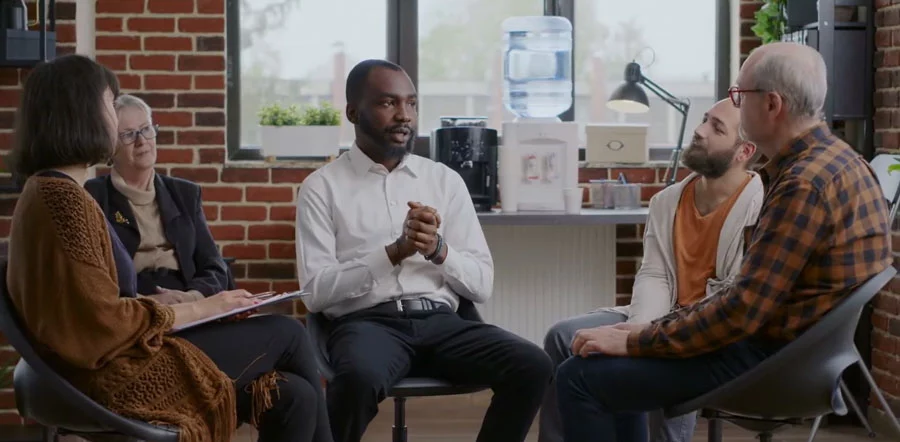
Al-Anon 12 steps

Al-anon 12 steps

Al-Anon is a fellowship of relatives and friends of alcoholics that was established in 1951. Sixteen years after her husband created Alcoholics Anonymous, Lois Wilson (often known as Lois W.) created Al-Anon. She founded the group after experiencing firsthand the challenges faced by those who care for a family member or friend with an alcohol use disorder.

Support for Al-Anon comes solely from member contributions. Even if the addict in your life hasn’t yet found sobriety, you may still find support and learn how to best assist them by attending a meeting. Al-Anon’s goal is to help its members feel less alone by showing them they aren’t facing their problems alone.

Keep reading to find out more about the steps involved in Al-Anon and what you can do to help both yourself and a loved one who is struggling with alcohol and/or drug use.

Addiction and Alcoholism as a Family Disease

Because of the devastating effects, alcoholism can have on both the alcoholic and their loved ones, Al-Anon approaches the problem as one that affects the entire family. Recuperating successfully requires a strong network of loved ones and friends.

Some loved ones may place the blame for their alcoholic relative’s drinking on themselves, or they may not comprehend why their relative isn’t making recovery a top priority. These topics are discussed at meetings, along with the concept of alcoholism as a genetic disease and its effects on family members.

While technically Al-Anon is centered only around those whose loved ones have issues with drinking and does not encompass drug use, in reality there is not a clear distinction for most Anon groups.

If your loved one tends more toward drug use, and your area has Nar-Anon meetings, these can be another helpful resource for support, while still firmly based on the twelve step philosophy.

What Happens at a Meeting?

Anyone who another person’s drinking or drug use has harmed is welcome to attend Al-Anon sessions. Al-Anon is there to support you if you are concerned about an alcoholic or an alcoholic’s lifestyle affecting you.

Due to uncertainty about the nature of the initial gathering, some potential attendees may be unwilling to show up. Here are a few things to keep in mind if you’re thinking about going to a meeting:

  • Firstly, Al-Anon is a completely confidential organization.
  • Every individual attending an Anon meeting has been directly or indirectly impacted by drinking or drug use by a loved one/
  • It is recommended, but not needed that everyone stands out and shares their struggles.
  • Various kinds of gatherings exist. It’s possible that some will be more useful to you than others.
  • The fellowship as a whole, known as Al-Anon, has no religious affiliations. However, the basis is on a type of spiritual awakening or acceptance of a higher power being in control. There is certainly a primary spiritual aim regarding the 12-Step Program.
  • The meetings are based on Al-Anon’s twelve steps.

Participants in Al-Anon sessions are encouraged to “take what you want and leave the rest.” Instead of lecturing attendees on what they should do, meetings become opportunities to reflect and commiserate on how best to remain healthy while dealing with a loved one’s drinking.

What Are the 12-Steps?

What Are the 12-Steps

These are the steps, word-for-word, from the original and official 12-Steps of Al-Anon:

  1. “We admitted we were powerless over alcohol—that our lives had become unmanageable.” —You must learn that alcohol abuse is a disease that ran your life.
  2. “Came to believe that a Power greater than ourselves could restore us to sanity.” —Participants drive themselves to the breaking point trying to change something in a loved one’s personality. When you admit you’re powerless, your higher power will bring you back to sanity.
  3. “Made a decision to turn our will and our lives over to the care of God as we understood Him.” —You must learn to let go and accept in order to heal.
  4. “Made a searching and fearless moral inventory of ourselves.” —You must make a list of things you’ve done to harm family and friends. This is done through a deeply personal self-assessment.
  5. “Admitted to God, to ourselves, and to another human being the exact nature of our wrongs.” —Each member must dive into their memory bank and analyze every act of wrongdoing.
  6. “Were entirely ready to have God remove all these defects of character.” —This step is very important, as it is the full acceptance of the recovery process supported by a Higher Power.
  7. “Humbly asked Him to remove our shortcomings.” —This part of the 12 Steps helps members understand how they may have been controlling or judgmental toward an addict and how that is counterproductive.
  8. “Made a list of all persons we had harmed, and became willing to make amends to them all.” —Oftentimes, making amends starts with yourself. Many people blame themselves for their loved one’s addiction. They must be willing to forgive themselves and make amends. In the future, when wrong, promptly admitted mistakes and slipups lead to less damage.
  9. “Made direct amends to such people wherever possible, except when to do so would injure them or others.” —After you are willing to make amends, the next step is to take action.
  10. “Continued to take personal inventory and when we were wrong promptly admitted it.” —Going through the 12 Steps is a process that takes time. Although members have already made an inventory, slipping up is normal. Step 10 recognizes this is an ongoing process.
  11. “Sought through prayer and meditation to improve our conscious contact with God as we understood Him, praying only for knowledge of His will for us and the power to carry that out.” —This is a personal, spiritual step that encompasses acceptance and comfort amid the stress of recovery.
  12. “Having had a spiritual awakening as the result of these steps, we tried to carry this message to others, and to practice these principles in all our affairs.” —The last step is a realization that the member’s journey is not over. Members are then encouraged to support other members with what they’ve learned by passing their knowledge on during future alcoholics anonymous meetings.

Other Al Anon Groups

Additional Al Anon Groups exist that practice Al Anon’s twelve steps or focus on addiction treatment. Through these al anon meetings, family members and other individuals, such as the children of those going through alcohol abuse, may participate and maintain personal anonymity.

Meetings are also crafted for adolescents, known as Al-A-Teen, are al anon meetings for teenagers and young people to take personal inventory of where they stand in addiction treatment and gauge the exact nature of their alcohol abuse challenges. These additional al anon entities are a part of a broader family known as Al Anon Family Groups.

What can you expect from an al anon meeting? In the section below, you’ll find example topics of discussion during a normal al anon meeting.

All Our Affairs: Topics of Al Anon Meetings

Topics of Al Anon Meetings

Topic discussions are the norm in Al-Anon Family Group and standard Al-Anon sessions. This implies the meeting’s chairman will select a subject matter linked to their own personal experience coping with an alcoholic loved one. It is not uncommon for the chairman to solicit ideas for topics from the audience.

Participants in the meeting can then share their knowledge, courage, and optimism about the chosen topic.

The Reasons For and Causes of Alcoholism

Realizing that alcoholism is a disease helps shed light on the alcoholic’s repeated attempts to kick the habit, only to relapse a few days later. Learn more about it.

Dealing With Anger at an Alcoholic

You and your family members may receive conflicting messages on handling rage. Do certain family members get to let off steam, while you’re admonished to keep your cool? At Al-Anon, you learn that anger is a natural and normal emotion. It’s fine to feel rage; the important thing is to figure out how to channel it constructively.

Altering Perspectives on Alcohol

In the Al-Anon meeting’s opening statement, “So much depends on our own attitudes, and as we learn to set our issue in its real perspective, we discover it loses its ability to dominate our thoughts and lives.” Which mindset is ruling your daily activities?

Enabling Alcoholic Behaviors

It’s possible that your well-intentioned attempts to aid the alcoholic instead encourage the person to keep up their destructive patterns.

Confronting Uncertainty

The ideas discussed and practiced in Al-Anon Family Groups can be useful for adapting to the inevitable and, at times, dramatic shifts that occur in everyone’s lives. You may not be able to change the conditions much, but you can change your attitude about the problem.

Detachment with Compassion

It might be challenging to master the art of detachment. Do you want to be the one to step in and rescue the day when a person with alcohol use disorder has a crisis? This could be the last thing you should do if you want that individual to finally ask for assistance.

Unrealistic Expectations and Managing Them

When dealing with a loved one with an alcohol use issue, are your expectations too high? If you don’t learn to adapt your expectations to be more aligned with reality, you may end up feeling disappointed and frustrated.

Powerlessness Over Alcohol

Powerlessness Over Alcohol

You may have joined Al-Anon believing the entire time that there was something you could do to make the alcoholic realize there was a problem and seek help. The first step is realizing you can’t control your drinking.

Mind Your Own Business

In Al-Anon, members are reminded that they are not responsible for the drinking habits of their loved ones. Embarrassment and humiliation are not yours; they are theirs to bear because of their actions. It is not a reflection on your worth as a parent, friend, husband, or sponsor if they make “poor” decisions.

They should be allowed to learn from their own errors. You can only contribute effectively by speaking up and sharing your wisdom, fortitude, and optimism when the time is right.

Day by Day: The Only Way to Live

The tagline “one day at a time” may sound like just another overused adage, yet it has a lot of insight in its reminder to focus on the now rather than dwelling on the past or imagining the future.

Find Lasting Addiction Recovery at Best Rehabs In Arizona

If you are looking for a treatment center that can support your loved one in addition to getting help from a 12-Step Al Anon program, look no further than Best Rehabs In Arizonas in Colorado and Arizona.

Best Rehabs In Arizona takes a different approach to healing and believes that alcohol and other substance abuse issues are best treated through evidence-based avenues, the treatment of underlying mental health disorders, and a holistic healing environment.

Contact a member of our warm and welcoming Admissions team today to learn more about how we can help your loved one begin a lasting recovery journey of their own!


 

Friends of Bill W

Friends of Bill W

In the early stages of your sobriety journey, you may decide to enroll in a 12-step fellowship, such as Alcoholics Anonymous or Narcotics Anonymous. There is a whole new way of thinking and making decisions that come with recovery, and there is also what may seem like a whole new language to learn: “AA jargon,” like the term ‘friends of Bill W.’

William Griffith Wilson, also known as Bill Wilson, or “Bill W.,” and co-founder Bob Smith, or “Bob,” are the originators of several AA terminologies, sayings, and expressions. Since the group’s inception, several idioms have emerged, including the association with Bill W that has become synonymous with membership, especially as shorthand on cruise lines and ships.

Keep reading for our guide to what 12-step programs offer as well as a helpful resource for the AA jargon often used by members.

What Is AA Language?

Many expressions and idioms associated with sobriety may be found in AA and NA literature. They might be used by other 12-step groups that follow the AA paradigm. The AA jargon originated for several causes.

Phrases like “it works when you work it” is meant to serve as reminders of basic ideas for the group. Following the AA Traditions, the organization chooses to use phrases like “Friends of Bill W.” to ensure that its members’ anonymity is maintained.

You may learn the language of the organization and its members by looking at some real-life instances of the most popular AA jargon, and you may even be familiar with some sayings like, “One Day at A Time.’

Taking the Next Right Action

Participating and working the 12 Steps and regularly attending AA groups is known as the “Right Action.” More specifically, attending an AA meeting and participating with the help of a sponsor is considered the right action. At any given meeting, you’ll find many participants attending with their sponsors, who are in recovery themselves.

“Alcoholics Anonymous: The Story of How Over a Hundred Men Have Recovered from Alcoholism” is the basic text of AA and is usually referred to as “The Big Book.” There are many inspiring accounts of AA members’ journeys to sobriety outlined within its pages.

Actions that are “correct” for AA members are those that are accomplished via working the steps. Following the Steps is meant to help one develop a more positive outlook on life, other people, and the recovery process as a whole. In an effort to alter a substance-abusing lifestyle, a shift in outlook and approach is essential.

Friends of Bill W. and Cruise Ships

Friends of Bill W. and Cruise Ships

The term “a friend of Bill W.” used in AA does not relate to anyone you may know in real life. Instead, it is a code term used to conceal the identities of the group’s participants. Why do individuals in recovery value anonymity so highly, and what does it entail exactly?

The anonymity of its members is one of AA’s core tenets. In a word, anonymity in AA meetings implies that everyone there will respect your privacy and keep whatever you say to themselves.

You may be asked if you know Bill W if you are seen loitering around the meeting place and peering through doors or windows.

The person asking you this code word is trying to determine whether you are truly seeking the AA meeting in a method that keeps your identity secret.

Originally, the term “friends of Bill W.” was used as a cruise compass to find meetings onboard cruise ships where members wanted to stay completely anonymous on vacation but still sneak in a meeting or two. Signage that indicates a meeting for ‘friends of Bill W’ can still be seen on cruise lines around the world, though the term is used somewhat less as many people proudly acknowledge their recovery and membership, even in otherwise Anonymous 12-step programs.

The Importance of Anniversaries and Birthdays in Sobriety

All recovery steps are celebrated as successes in AA and other 12-step programs. When a member of AA or NA reaches certain sobriety milestones, such as 30 days, 90 days, six months, etc., they get a “chip” as a physical reminder of their accomplishment.

The passage of another year signifies the occurrence of a “birthday.” The moderator of a meeting may inquire if someone is honoring one of these dates. At an alcoholics anonymous meeting, a “10th yearly birthday” is the anniversary of a person’s sobriety rather than their actual birth date. Thus, it’s understood that the individual has been sober for 10 years.

Importance of Anniversaries and Birthdays in Sobriety

In the Eastern part of the United States, anniversaries are more common than birthdays, so you might not hear much about a person’s “anniversary” instead of their “birthday.” Biological anniversaries are sometimes referred to as “belly button birthdays” to avoid confusion.

Old-Timers and The Traditions of the 12 Steps

The phrase “old-timer” is commonly used among AA group members, but you might be startled to learn that the person being referred to as such is actually rather young. That’s because the only factor that matters for determining whether or not someone is an old-timer in AA is how long they’ve been attending meetings and maintaining continuous sobriety.

A long-term AA member is a veteran of the program. These people may take up roles as meeting facilitators, sponsors, or event volunteers within the organization. Some long-time members can even recite large chunks of The Big Book verbatim.

Of course, there will always be some “old-timers” who have “been around the block,” so to speak, when it comes to AA recovery, so you might encounter an “old-timer” who is actually older. In such an instance, “a seasoned AA member” could be the most accurate description.

A Dry Drunk and the Importance of Active Participation

Addiction recovery communities outside of AA may find the phrase “dry drunk” unpleasant because it is not a clinical word. This word describes a person who has abstained from substance use but has taken no further measures toward recovery.

In an AA context, this might signify that the individual has ceased working the 12 Steps and attending meetings.

A “dry drunk” is someone who has stopped drinking or doing drugs but hasn’t changed their outlook on life or the way they think about things. When someone is in this mental state, they may have feelings of nostalgia, fixation, and a desire to reexperience the euphoric benefits of drug or alcohol usage.

Clinical research has confirmed that this is a real phenomenon that can occur during either the emotional or mental relapse stages. According to the research, when alcoholics relapse, it is a slow process that typically begins with thoughts and feelings of obsession with drugs or alcohol.

It Works If You Work It

Setting up chairs for AA Meeting

The “work” of AA revolves around the 12 Steps, a set of recovery principles. Using the AA fellowship, going through the 12 Steps, and living by the 12 Traditions of AA are all examples of “working it,” and the statement “it works if you work it” describes this process well. The “work” of AA includes not just meeting with other members but also performing acts of service to the community. Examples of this service include the following:

  • Community service (e.g., setting up chairs, making beverages, or other tasks required for a meeting)
  • Reaching out to fellow 12-steppers to aid a struggling newbie.
  • Meeting leadership
  • Accepting and supporting newcomers via sponsorship
  • Putting in a request to share your AA success story as a speaker

Step 13: A Step Better Left Alone

If you’re lucky enough to avoid having to go through Step 13 during your time in recovery, the expression simply refers to a sexual relationship between a seasoned AA member and a newcomer to the fellowship who has just discovered meetings.

Suffice to say, when you’re first becoming sober, it’s not a good idea to jump into a new romantic relationship.

Friends of Bill W. and Methods of Celebrating Fellowship

Whether it’s friends of Bill W. or another type of lingo used at get-togethers, if there’s one thing this “secret code” does besides maintain anonymity, it also promotes a higher level of support by creating a camaraderie. This gives people who join a new type of hope and a sense of accountability, as there’s a distinct feeling that they’re a part of something unique and special.

At Best Rehabs In Arizona Recovery, we use a similar mindset, organizing get-togethers in the form of a 12-Step Meeting, giving clients a chance to bond with peers, in addition to taking part in some type of spiritual or holistic experience.

Not only does this give clients a chance to bond with peers, but there’s additional expert advice available via group meetings you wouldn’t otherwise have access to with counselor meetings.

We would love to get you on board with our groundbreaking treatment program! To find out how we can help you on your path to recovery and lay a strong spiritual foundation, contact a member of our admissions team today.


Am I An Alcoholic?

Am I An Alcoholic

What Is Alcoholism?

Alcoholism is an addiction to alcohol. While this explanation sounds simple enough, it can still cause a lot of confusion.

There are different types, levels, and experiences that alcoholics experience. 

It’s easy to convince yourself that you’re not an alcoholic if you haven’t experienced financial or relationship troubles, lost your license, or been in an accident while intoxicated.

Alcoholism isn’t always this straightforward. 

So, how do you know if you have a problem if it doesn’t look like our overgeneralized idea of what alcoholism is?

We’ll break down the answer to this question throughout the rest of this article. 

Am I An Alcoholic?

At some point, many binge drinkers ask themselves: do I have a drinking problem?

Generally, when your drinking reaches the point that you have to ask yourself this, the answer is likely yes.

But we will help you further evaluate and understand this complex concern. 

Use, Abuse, Dependence, and Alcoholism

Use, Abuse, Dependence, and Alcoholism

Addictions to alcohol are exceedingly unique for a few different reasons.

First, alcohol is an entirely legal substance, and therefore, generally goes unregulated for those over 21. Second, it is normalized enough to be a staple in most gatherings and celebrations. 

When was the last time you attended an office party, holiday gathering, or birthday party where no one had even one drink?

Third, it can be confusing and upsetting to try to understand why some people become addicted and others do not. 

So, how do we distinguish normal, healthy alcohol use from abuse, dependence, and alcoholism?

Nearly 18 million American adults have an alcohol use disorder. Every one of these disorders is unique.

They range from mild to severe and are never one-size-fits-all. 

But what separates normal use from abuse is the frequency.

What separates abuse from dependence is compulsive use.

Dependence is a key factor in alcoholism, as well. As your body builds a tolerance and dependence, you crave alcohol more. 

And you experience additional withdrawal symptoms when you try to stop drinking, too. Withdrawal symptoms are some of the most common red flags. 

Alcoholic Stereotypes: What If I Don’t Fit the Mold?

For many years, the media has perpetuated alcoholic stereotypes that aren’t always entirely accurate.

On TV shows and in movies, they all tend to resemble each other.

They’re down on their luck, broke or alone, got fired from their job, or changed course after an accident. 

While these situations surely exist, alcoholics come in many other forms that we don’t always acknowledge the way we should.

Addiction is a chronic disease that affects our brain chemistry.

Depending on our medical histories, mental health, and other individual factors, it can affect us in different ways. 

High-functioning alcoholics tend to break all the rules associated with alcoholic stereotypes.

Rather than appearing to be at rock bottom, high functioning alcoholics often live relatively normal lives.

They work, often in high-paying jobs, they’re educated, they have families and spouses, and balance daily responsibilities alongside their drinking. 

Signs of Alcohol Dependence

So, since alcohol use disorders come in different forms and levels, how do you know if you’re an alcoholic?

There are mild, moderate, and severe alcohol use disorders, alcoholism, and binge drinkers.

At the different stages, many of the signs and symptoms may overlap. 

This can cause some confusion. But there are red flags to look for in those with alcohol dependence.

What makes someone an alcoholic is the inability to stop drinking without experiencing cravings and other withdrawal symptoms.

In the next section, we will go over common risk factors for alcohol use disorders. 

Causes and Risk Factors for Alcoholism and other Alcohol Use Disorders

Causes and Risk Factors for Alcoholism and other Alcohol Use Disorders

Addiction develops from several different pathways. Mental health disorders, genetics, and environment are three of the most significant pathways.

Understanding the risk factors for developing alcoholism can help us avoid or overcome it. 

Some of the most common risk factors for alcohol use disorders include: 

  • Having more than 15 drinks per week if you’re male
  • Having more than 12 drinks per week if you’re female 
  • Having one or more parents with an alcohol use disorder 
  • Having pre-existing mental health disorder(s), most commonly depression, anxiety, or schizophrenia 
  • Having a stressful school, work, or home life 
  • Having low self-esteem 
  • Having a social circle that prioritizes drinking over all else or pressures others into participation even if they prefer not to drink 

Getting Answers and Understanding Your Addiction

It is not always easy to determine if we have a problem or not. The list above offers guidance into how alcohol use disorders develop.

But what do the symptoms look like once it has already developed? One of the first signs is personality changes. 

This might mean drinking alone or avoiding daily activities or responsibilities to drink more.

It might mean avoiding gatherings or activities where alcohol is not served, sneaking drinks there or in other inappropriate situations, or hiding your drinking from your loved ones.  

Needing more alcohol to get drunk because your body has built a higher tolerance is another sign of trouble.

Another sign is someone lying or becoming defensive, angry, or violent when their drinking is questioned. 

Lastly, drinking even after problems arise in your work-life, finances, relationships, or health is another sign of trouble.

If you are looking for additional signs or have unanswered questions, you can take a self-assessment quiz.  

Self-Assessment Quizzes

There are three free and confidential online screening tests you can take to better understand your drinking habits: 

The CAGE quiz is a good first step in determining whether your habits have become a cause for concern.

Developed from the Diagnostic and Statistical Manual of Mental Disorders, this four-question quiz is an easy starting point. 

The MAST test is 22 questions with a simple scoring system at the end.

A score of six or higher indicates hazardous drinking habits or alcohol dependence.

The experts who created the test at the National Council on Alcoholism and Drug Dependence recommend calling a healthcare professional if you score above a six. 

The Alcohol Use Disorders Identification Test (AUDIT) is a simple, effective alcohol consumption screening.

This is the most widely used, as it is based on data from a multinational World Health Organization (WHO) study. 

Choosing the Right Treatment for Alcoholism

Choosing the Right Treatment for Alcoholism

In the same way that there are different types and levels of alcoholism, there are also different types and levels of treatment for it.

What works for one person may not work for another.

That’s why we personalize our treatment programs based on the needs of the individual rather than the needs of the majority. 

Best Rehabs In Arizona: A Full Continuum of Care Options

Someone with severe dependence or withdrawal symptoms, little support at home, and a history of relapse might be better suited for an inpatient or residential program.

This gives you 24-hour access to the care, guidance, and support of our expert teams. 

In the comfort and safety of our luxury-level facilities, you will work toward your goals through a variety of proven treatment methods.

A few of the most common treatment methods include behavioral therapies, support groups, and holistic remedies. 

Someone with a milder addiction, support at home, or full-time work and family obligations that prevent a full-time stay might be better suited for an intensive outpatient program or another option.

But we do not expect our clients to have all the answers before they come to us. 

We will work with you to determine which course of action will best fit your addiction and needs.

Because one-size-fits-all solutions are ineffective. We treat each of our clients on an individual basis.

That is the Best Rehabs In Arizona difference. Call us today at (866) 263-1820 to learn more.